
Is your Nervous System Stuck in Survival Mode?
This modern day world is so fast paced. The demands can feel constant and we often find ourselves feeling stressed and frazzled by it all.
You might look at friends, co-workers or other people in your life and wonder how they seem to have it all together and simply go with the flow. Its not that they always have their whole life sorted. It may be that their nervous system responds differently to stress or they have specific supports in place to help them manage it.
Our nervous system is our link to our environment around us. It is constantly receiving, interpreting and responding to information.
Our nervous system begins developing very early in life, and our experiences can influence how we respond to stress in the future. Previous experiences, particularly repeated or significant stressful experiences, can shape how we perceive and respond to certain situations. This may help explain why something can sometimes trigger a strong stress response, even when we can’t immediately understand why.
Understanding Different Nervous System States
One framework commonly used to understand our responses to stress is Polyvagal Theory, which describes different states of nervous system activation.
Ventral Vagal
The ventral vagal state is often referred to as our rest and digest or green zone.
In this state, we may feel calm, grounded, connected and present. It is a state associated with feelings of safety and allows us to rest, connect with others and carry out everyday activities without feeling as though we are under threat.
The goal isn’t necessarily to remain in this state all of the time. A healthy nervous system needs to be able to move between periods of activation and rest and, importantly, return to a regulated state once a stressor has passed.
Sympathetic State
The sympathetic state is commonly known as fight or flight, or a state of hyperarousal.
We need our sympathetic nervous system. It helps us respond to challenges, exercise, concentrate and react quickly when there is a genuine threat.
The problem can arise when we are spending too much time in this heightened state without enough opportunity for recovery.
When we are experiencing ongoing sympathetic activation, we may notice things such as feeling worried, anxious, panicked or on edge. Stress can also influence digestive processes, which is one reason some people notice changes in their digestion during particularly stressful periods.
Dorsal Vagal
In Polyvagal Theory, the dorsal vagal state is associated with hypoarousal, freeze or shutdown.
When someone feels overwhelmed, they may experience feelings of numbness, disconnection, low motivation or feeling flat and withdrawn.
Rather than thinking of these different states as inherently "good" or "bad", it can be helpful to understand that our nervous system is constantly adapting and responding to what is happening around us. We can help move ourselves from different states by learning to support the nervous system.
So, what can you do about it if you often feel dsyregulated?
There are many ways we can support our nervous system, and they don't have to be complicated.
1. Prioritise sleep
Sleep is a foundational support for your whole body. It’s also not just about the quantity of sleep you get, but the quality of that sleep.
Creating a consistent sleep routine, reducing stimulation before bed and giving yourself enough opportunity to sleep can all help support your body's ability to recover from the demands of the day.
2. Try breathwork
Our breath can be a simple tool we can use almost anywhere.
Try taking a slow breath in for four seconds, followed by a longer, gentle exhale for around six seconds. Continue for a couple of minutes, or for as long as feels comfortable.
It doesn't have to be a long meditation session. Even taking a few intentional slow breaths during a busy day can create a moment to stop and reset.
3. Spend time in nature
Get outside every day, even if it's only for five minutes.
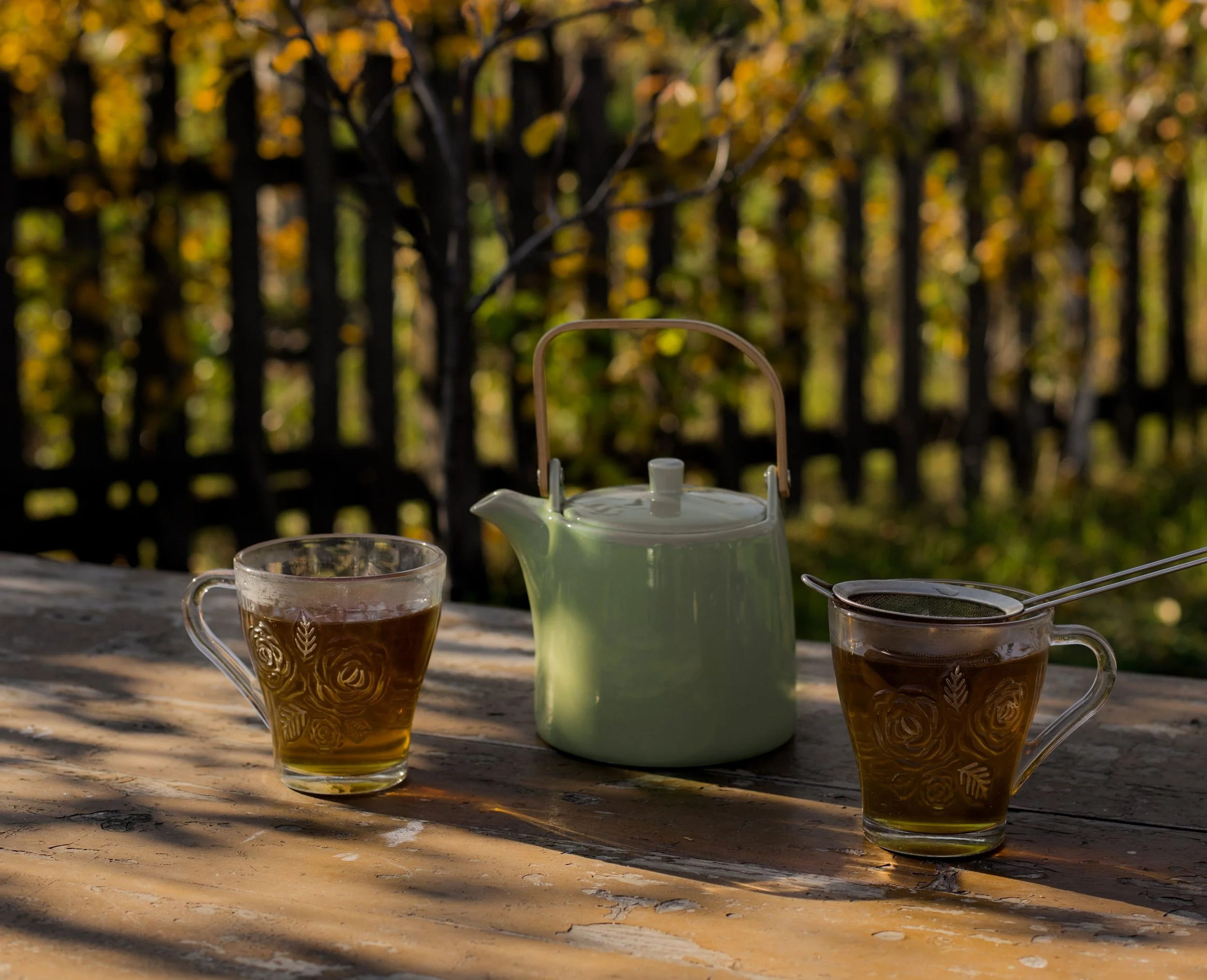
Take a walk, sit outside with your morning cup of tea, spend some time gardening or simply take your shoes off and feel the grass beneath your feet if that feels good to you.
Spending time outside can give us an opportunity to step away from constant stimulation, slow down and reconnect with our surroundings.
4. Herbs!
Herbal medicine is another tool that I love to use to support nervous system health.
The right herb will depend on the individual. Someone who feels wired, restless and unable to switch off may need different support from someone who feels exhausted and depleted.
There are many beautiful herbs traditionally used to support the nervous system. Here are a few of my favourites.
Nervous System Supporting Herbs
Withania somnifera — Ashwagandha
Withania, also known as ashwagandha, is a beautiful herb traditionally used to support the body during periods of stress. It is considered an adaptogenic herb and is commonly used in herbal medicine to support resilience to stress and nervous system health.
It can also pairs beautifully with warming herbs and spices such as ginger and cinnamon.
Matricaria chamomilla — Chamomile
Chamomile is a wonderful herb traditionally used when there is nervous tension, restlessness or irritability.
A warm cup of chamomile tea can also become part of a calming evening routine. I like to think of chamomile as helping the nervous system take a deep exhale.
Melissa officinalis — Lemon Balm
Lemon balm is an uplifting yet calming herb traditionally used to support the nervous system.
It is also traditionally used to support digestive function, making it the perfect herb for when digestive symptoms appear alongside periods of stress or nervous tension.
Passiflora incarnata — Passionflower
Passionflower is one of my favourite herbs.
I like to think of it as a big, relaxing hug for the nervous system. It has traditionally been used for nervous tension, restlessness and to support sleep, particularly for those who find it difficult to switch off at the end of the day.
I could continue listing the many amazing herbs used to support the nervous system, but I'll leave it there for today!
Herbal medicine isn't one size fits all. Herbs may not be appropriate for everyone and can interact with medications or certain health conditions, so individualised advice is important when using herbs therapeutically.
Nervous System Health Is One Piece of the Puzzle
If you've been struggling with ongoing health concerns that just don't seem to resolve, nervous system health may be another piece of the puzzle worth considering.
Chronic stress can influence sleep, digestion, energy, appetite and many other processes involved in our overall health.
Supporting your nervous system doesn't mean trying to eliminate stress from your life or remaining calm all of the time. Stress is a normal part of being human. Instead, it's about supporting your body's ability to respond to stress and return to periods of rest and recovery.
If you're struggling with ongoing digestive symptoms, fatigue, poor sleep or feeling constantly stressed and overwhelmed, this is something we can explore together as part of the bigger picture of your health.
Until next month,
Kirby x
